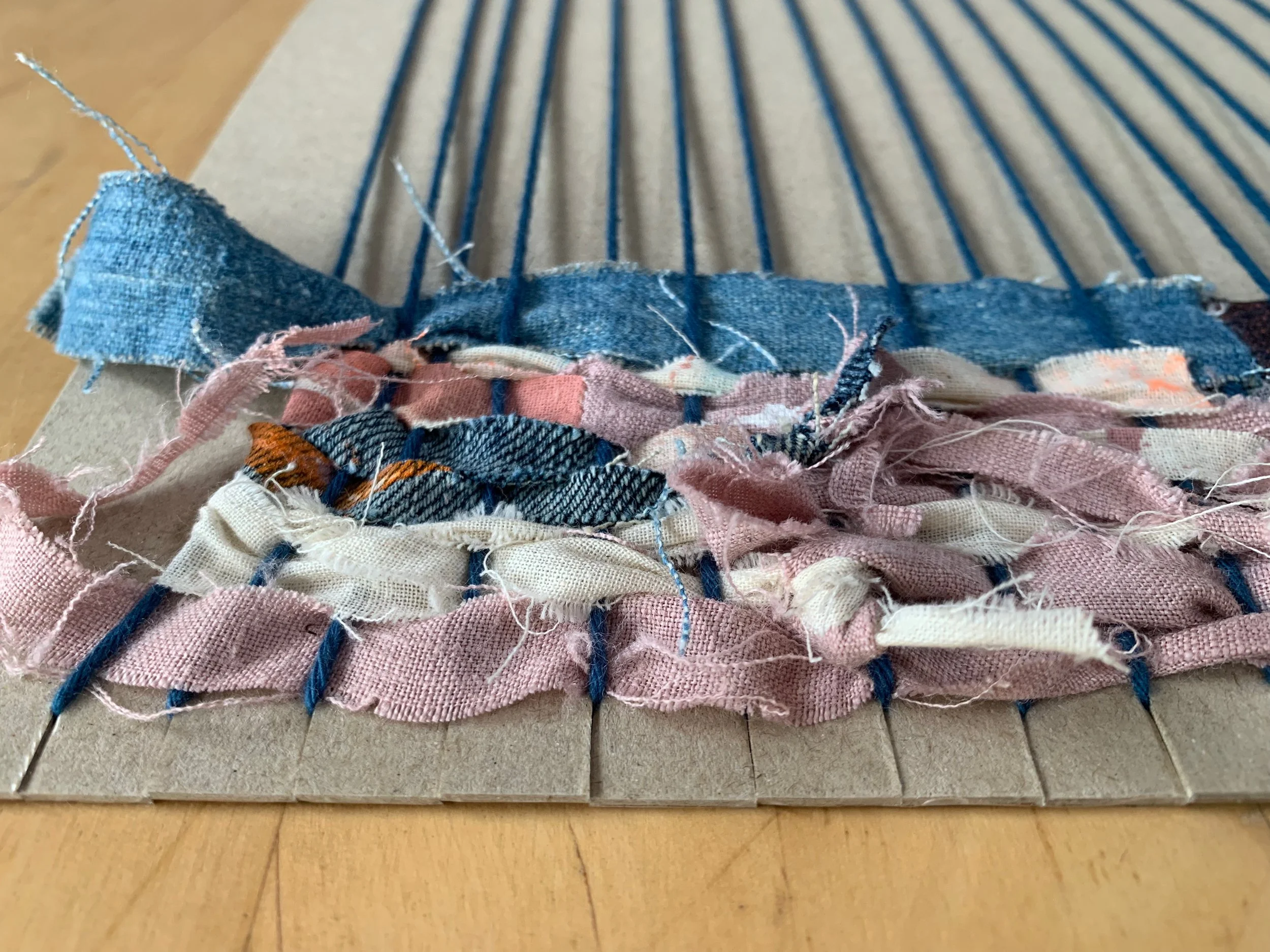
Here is some of what I’ve come to know about my therapeutic arts practice in the context of my placement and MIECAT workshops I’ve attended; how I’ve come to know this through reflexively engaging with my learning edges, values and ethics in the field; and what of these knowings I hope to integrate into my therapeutic arts practice going forward.
Fellow MIECAT co-inquirers/companions from my supervision group (Dennis, Mikhala and Sol ) and workshops (Bess and Julian) consented to sharing intersubjective offerings from our resonant collaborative unfoldings.
My placement has been at the Hawthorn Community House (HCH), where I’ve co-facilitated/participated in two weekly programs catering to people who experience social isolation and long-term mental health challenges - i.e. the Monday CROP writing group and Thursday NOVA art open-studio.
My thanks go out to all co-facilitators/participants at HCH for furthering my becoming as practitioner.
PRESENCE
I’ve come to understand the cultivation of presence as a vital ingredient of my therapeutic arts practice.
It acts as a container, allowing greater capacity for my core values of interdependent relationality, curiosity, unconditional love, playfulness, resourcefulness and humour.
When everything’s humming along, I don’t doubt my ability to sink into presence, finding myself in deep attunement to the subtleties of witnessing and process.
However, a learning edge that made itself known early this year was a challenge in transitioning at the start of studio sessions.
Going from “juggling all-the-things” within the busy-ness of family life and a reorientation towards the centeredness required in the therapeutic space, in service to both myself and the participants.
I'd often be running at a frenetic pace well past the studio set-up, ticking off “jobs” and hurtling around the studio with future-fuelled momentum, missing opportunities for connection when participants first arrived.
Attuning to my co-facilitators in NOVA, I noticed they began the sessions “...unhurried and infinitely patient in their work…no sense of needing to achieve something….embody(ing) a quiet spaciousness of presence.” (Tuffnell, 2017, p. 99).
So I looked closer for clues about how they were fostering this spaciousness.
With one co-facilitator, I observed that no matter what else was happening at the time, she’d stop everything to “be-with” participants on their arrival, communicating there’s no other place she’d rather be than right there.
Welcoming them with a steady gaze and a warm, open stance.
Another co-facilitator would settle into flow with her art-making before anyone arrived.
When they walked through the door, she’d greet them through this material invitation, looking up from her process to acknowledge each arrival, sharing and exploring it with anyone who showed interest.
Meanwhile in CROP, the co-facilitator offered ample time for the group to settle and banter before turning everyone’s attention to the writing prompts.
I’ve since reflexively engaged with integrating these ways of welcoming presence.
It’s led to significant shifts in my interactions as practitioner with an understanding that “art-based group work begins the moment members enter the group room or studio.” (Moon, 2016, pp. 20-21).
WALKING + GROUNDING
As I grappled with this learning edge, I realised the potency offered towards presence by my walk to-and-from placement.
An opportunity to tune into the sacred Wurundjeri lands, commune with the more-than-human and center myself.
I’ve befriended a large tree with bulbous roots in the park next to HCH.
Pausing to greet them before most sessions, placing my hand on their trunk, feeling the texture of the bark through my body.
Being reminded that if I move slowly, I’ll notice much more and that the ground is always there, with the capacity to hold me.
I take a sensory snapshot through my shoes, of my relationship to the earth, spreading my toes, feeling into my feet and right up my legs.
Partnered with what hums below, I can then go on to hold others in the therapeutic space.
I’ve also integrated this rhythm of walking into my post-session reflective practice - metabolising thoughts, feelings and experiences before re-entering my home-space.
Over time, I’ve created collages and documented sensory snapshots in response to some of these noticings. (Figures 1.1, 1.2, 1.3, 1.4)
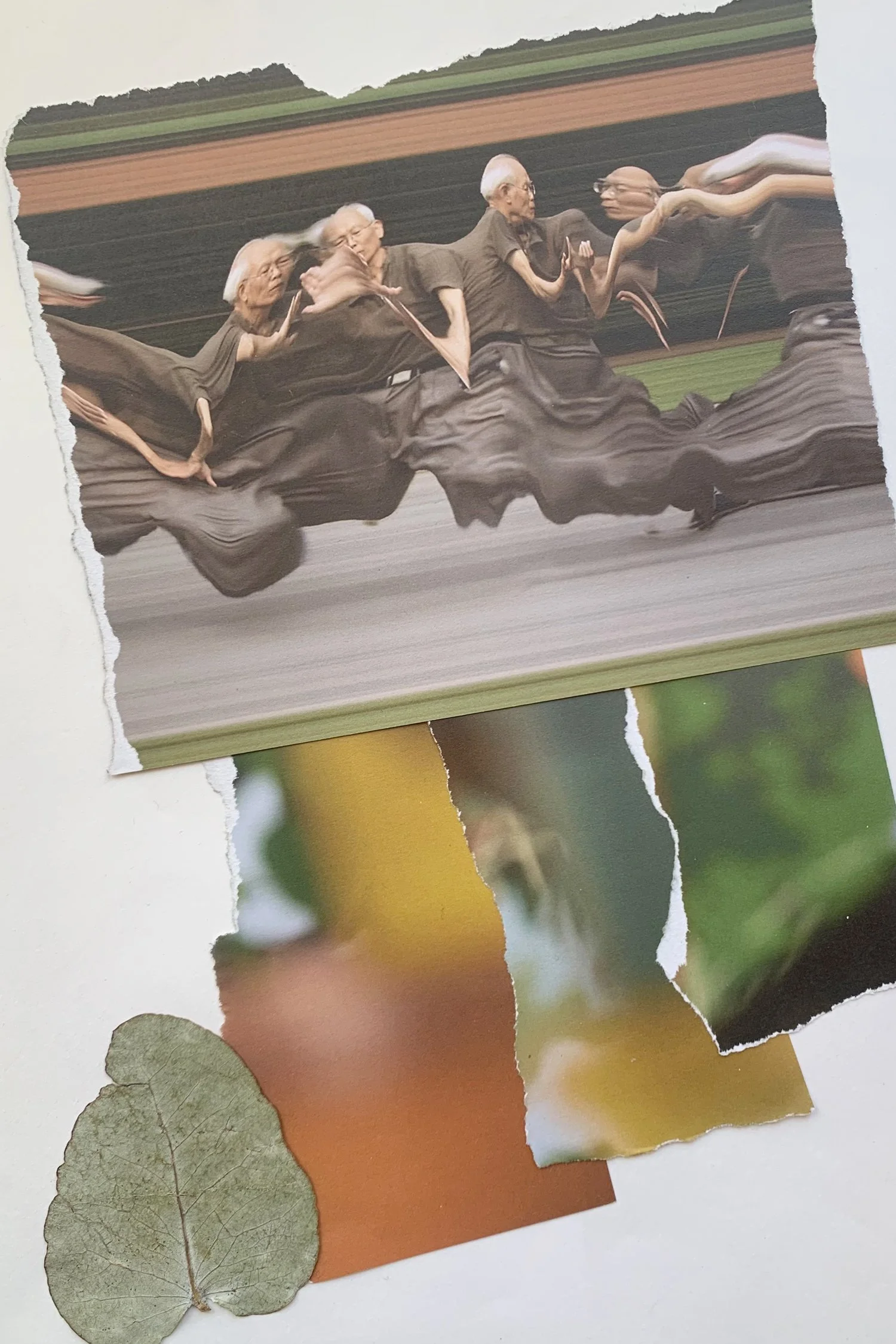
Figure 1.1: Emma Byrnes, Moving slowly, 2026. Still photo of collage.
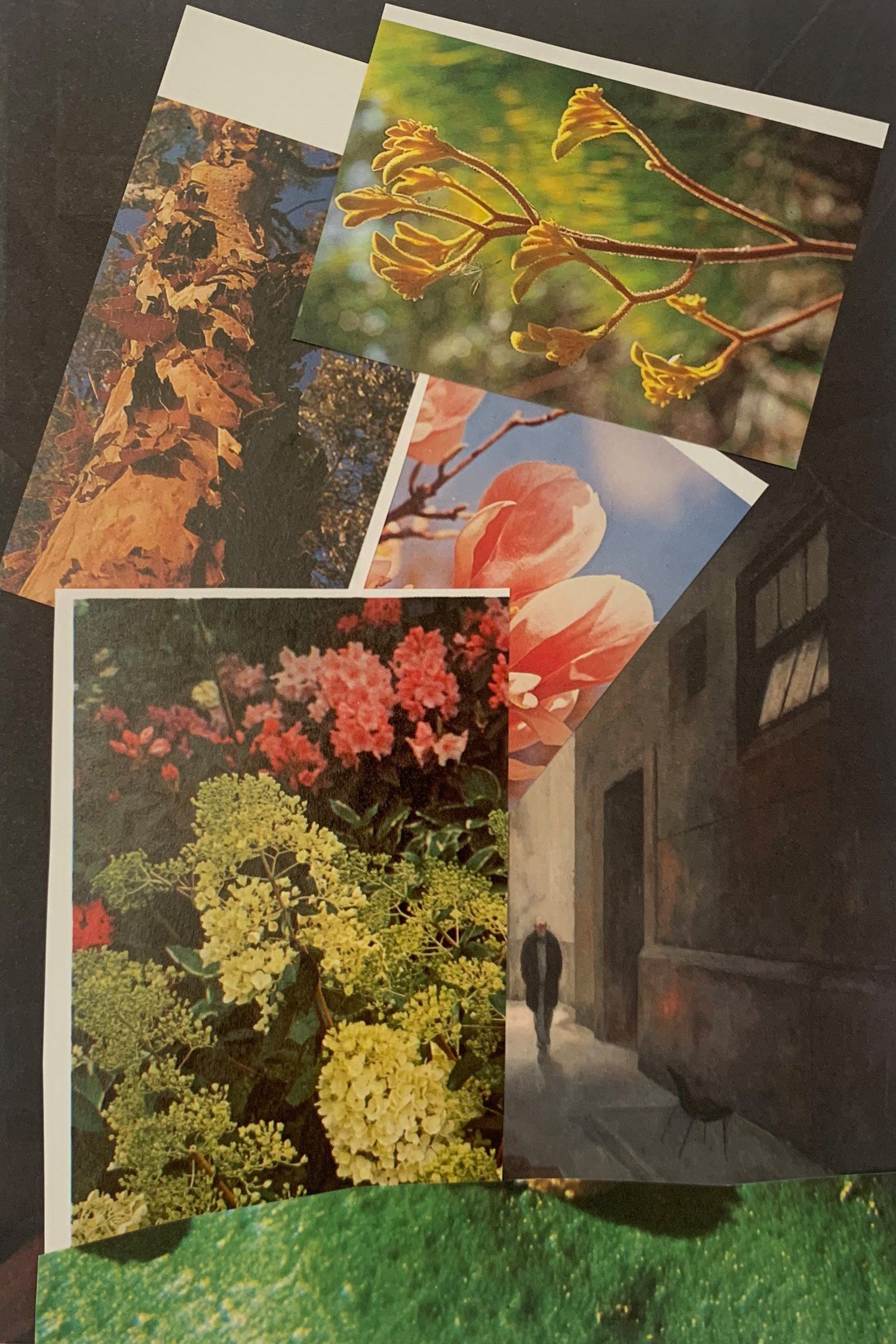
Figure 1.2: Emma Byrnes, to-and-from, 2026, Still photo of collage.
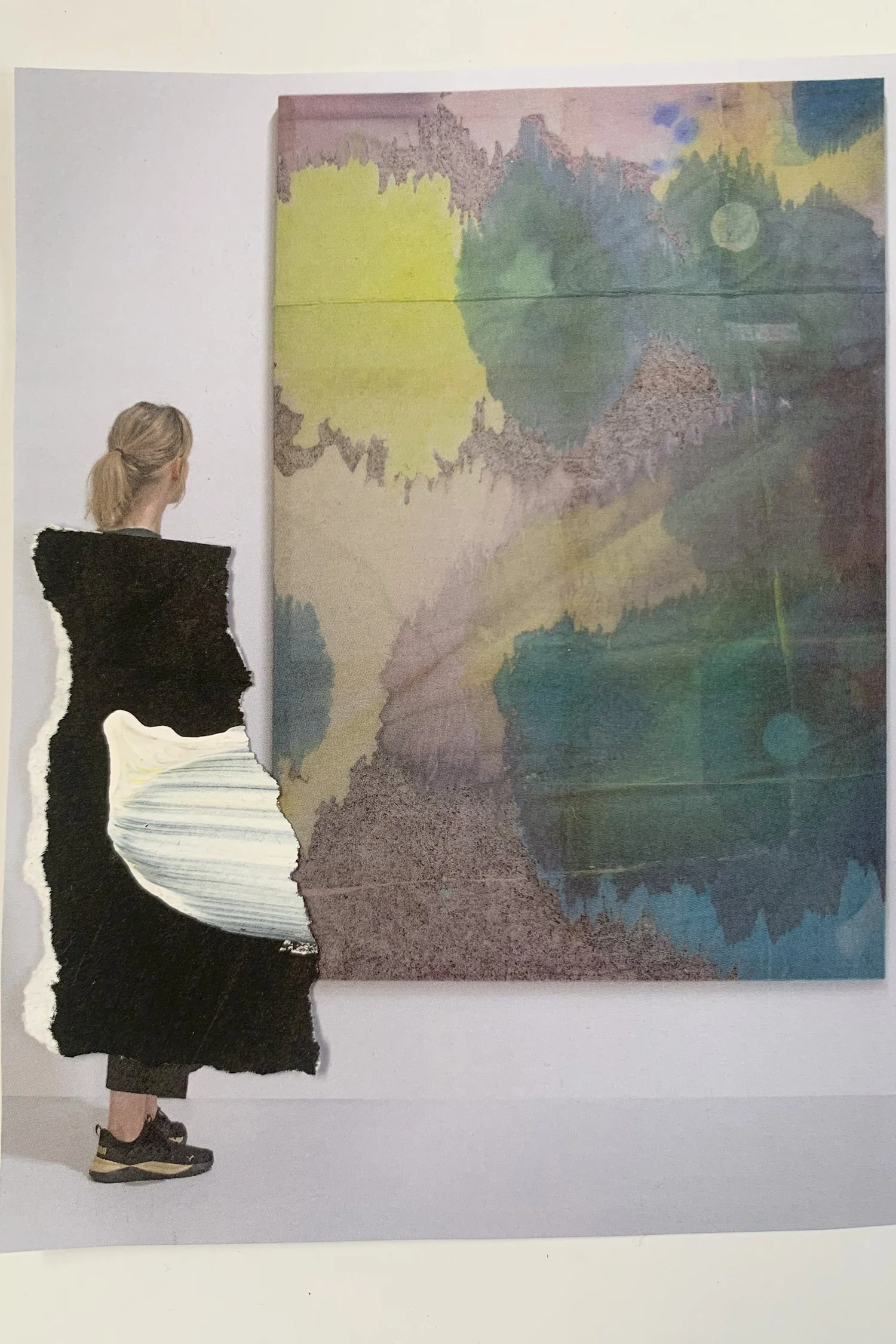
Figure 1.3: Emma Byrnes, Feeling the texture of bark through my body, 2026, Still photo of collage.
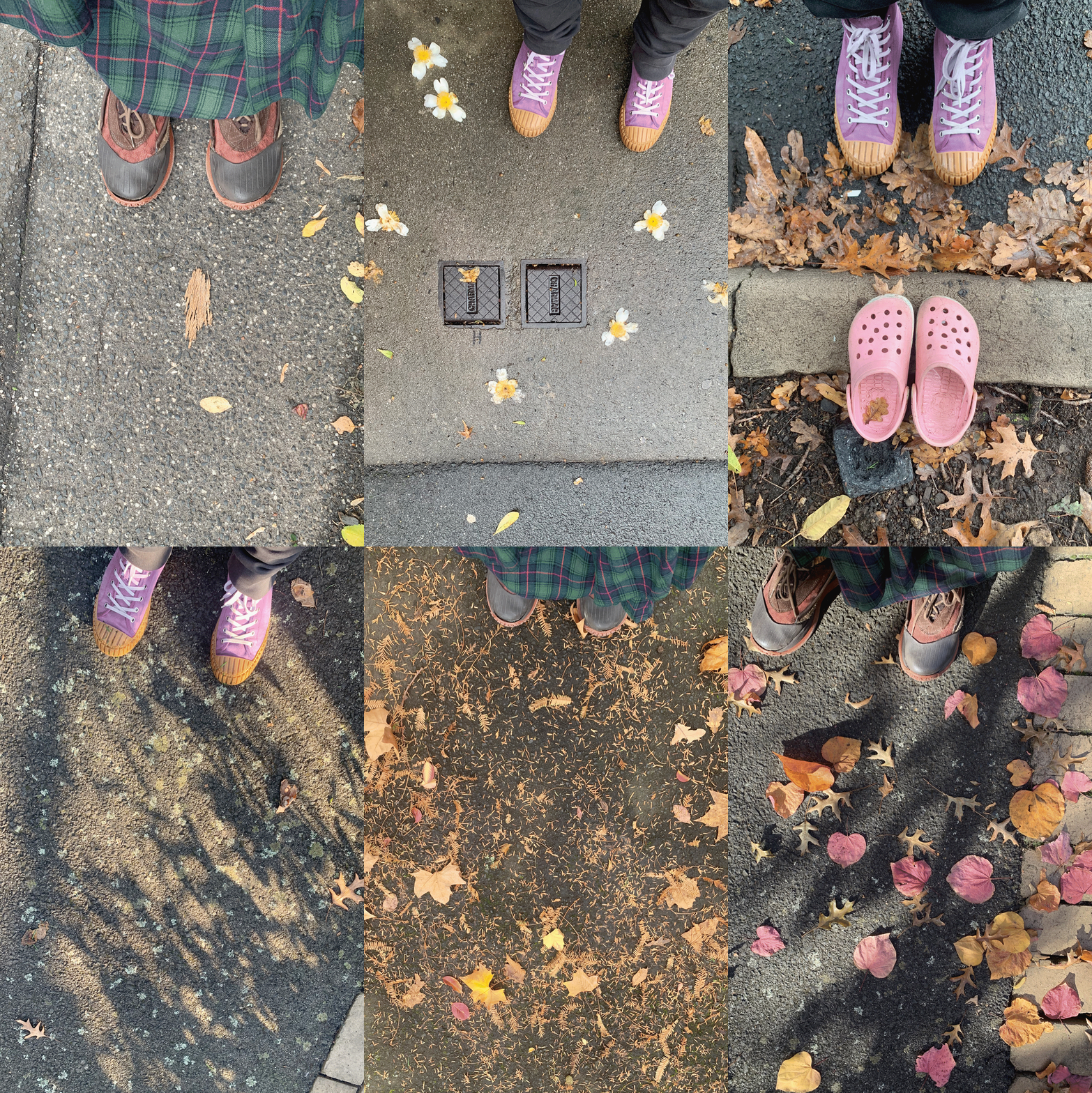
Figure 1.4: Emma Byrnes, Sensory Snapshot, 2026, Animated gif of photos of shoes.
STRETCHING INTO KAIROS
Another discovery that helps me align with presence has been adopting Ram Dass’ “...string of words:
Remember. Be Here Now.
Remember. Now be Here.” (Shakoor, 2011, p. xxvi)
I chose this mantra for a workshop 6/7 multimodal reflection, feeling resonance as the ink slowly traced down from several letters. (Figure 2.1)
Lingering with these drips, I felt chronos slowly stretch out into kairos…a visceral, embodied reminder as practitioner to be with(in) the materiality of the moment as it trickles down and settles onto/into/under the surface.
For me, the mantra holds both a circular playfulness and an unhurried acknowledgement of presence. And I’ve since wordlessly uttered it through countless moments, helping me to “...cultivate conditions within that foster growth for…self and others.”(Shakoor, 2011, p. xxv).
Figure 2.1: Emma Byrnes, Remember, 2026, video footage
MARKS + THE SHAPE OF US
When I started placement, I noticed the studio tablecloths and flat artboards (aka “process placemats”) almost immediately.
They seemed to depict the many hands and materials that had left their (literal) mark over days/years.
The canvas cloth was a sturdy, ever-present weave underneath overlapping layers and gestural impressions. Whereas the “process placemats” were their own unique, contained worlds… ever-iterative canvasses, thick with collective accumulation.
The participants shared my resonance, with one describing them as the best artworks ever created at HCH!
(Figures 3.1, 3.2, 3.3)
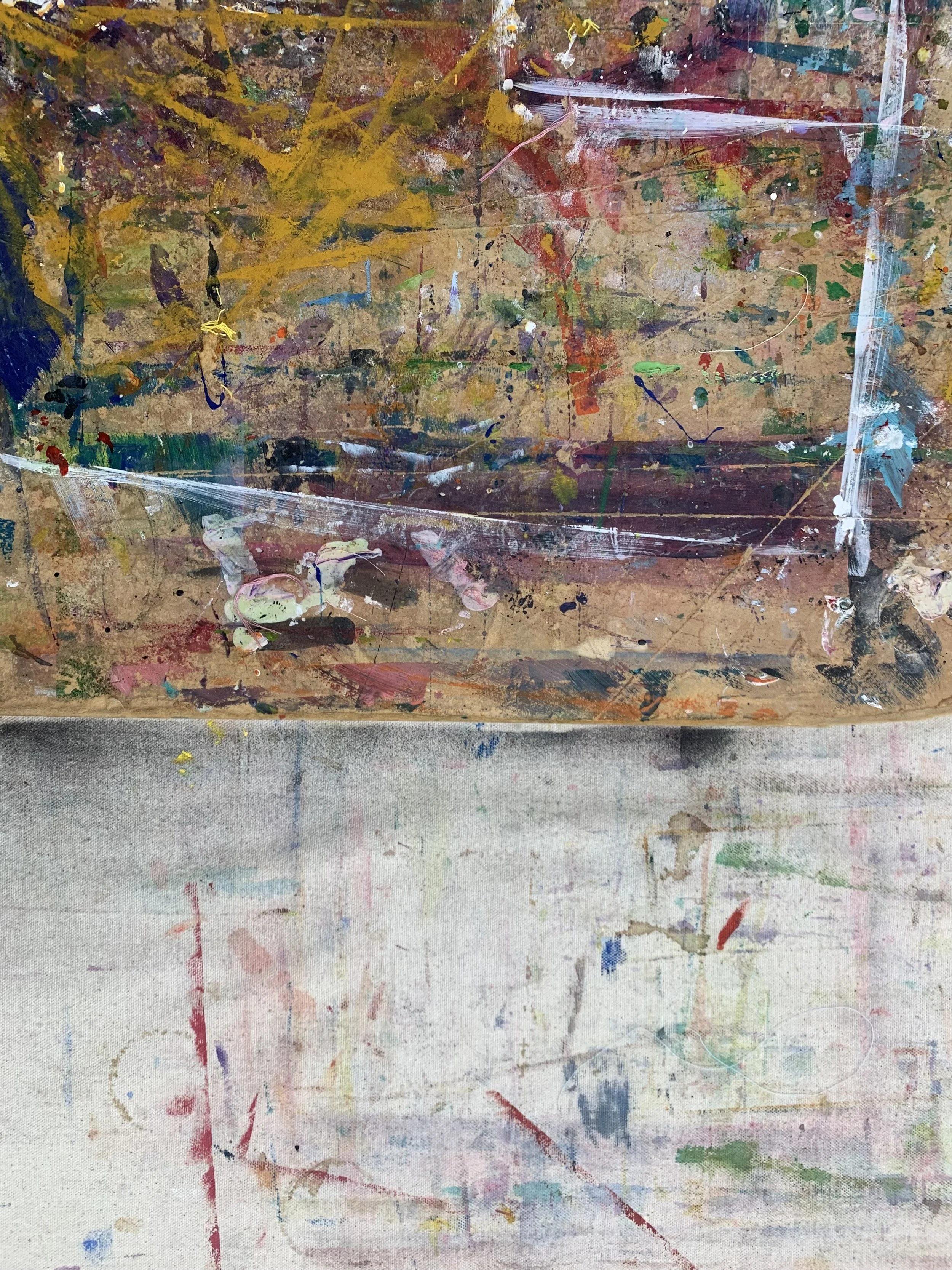
Figure 3.1: Emma Byrnes, Tablecloth + placemat, 2026, Still photo of canvas tablecloth and artboard.
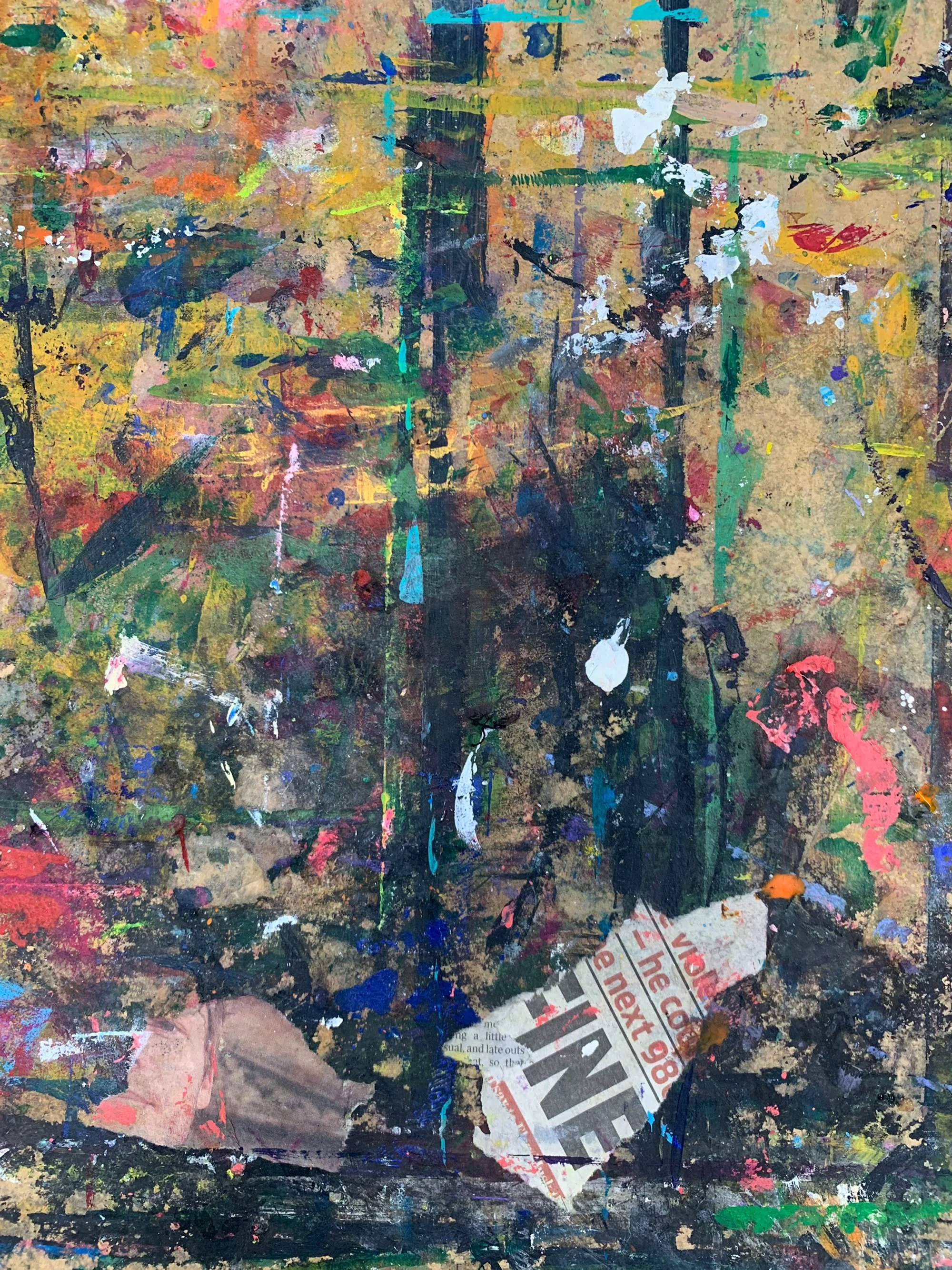
Figure 3.2: Emma Byrnes, Process Placemat, 2026, Still photo of artboard.
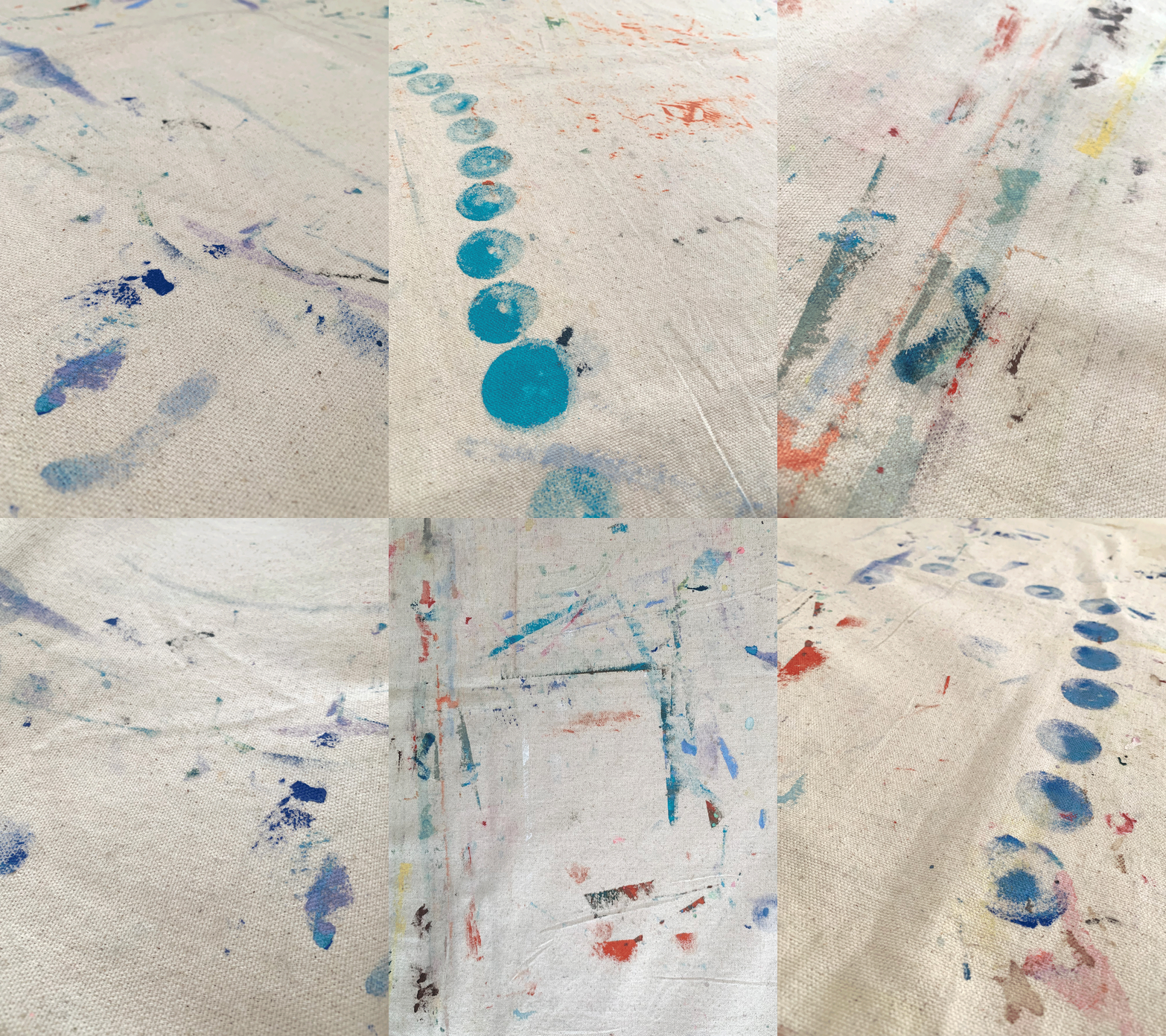
Figure 3.3: Emma Byrnes, Layers of cumulative cloth, 2026, Animated gif of canvas tablecloths.
A few weeks later, I sat in on several feedback sessions focussed on both the NOVA and CROP groups.
It was invaluable to hear how HCH forms the shape of participant’s weeks, offering profound connections and support through regularly gathering in a “safe-enough” space to share and be witnessed by making art and/or writing alongside others.
The sense of belonging they receive being an antidote to the social isolation they otherwise often experience, with the studio holding many memories of past participants/art therapists, who’ve left their influence and (literal) mark on the participants and the space.
I left those sessions inspired by the participants' acknowledgement that HCH fosters a “coming-togetherness".
Considering one of my core values is interdependent relationality, it validates my decision to have sought out this open studio placement and the effectiveness offered by a third-space communal context.
I later expressed this context by featuring one of “the collective cloths” underneath cupped hands to represent the holding offered by the co-facilitators, the participants and the space.
“The people in the space…play a part in forming and shaping their surroundings….as art therapists, we are instrumental in creating environments intended for habitation and use…clients who pass through…will inevitably leave their marks on the sense of place that is communally created.” (Hyland Moon, p. 86)
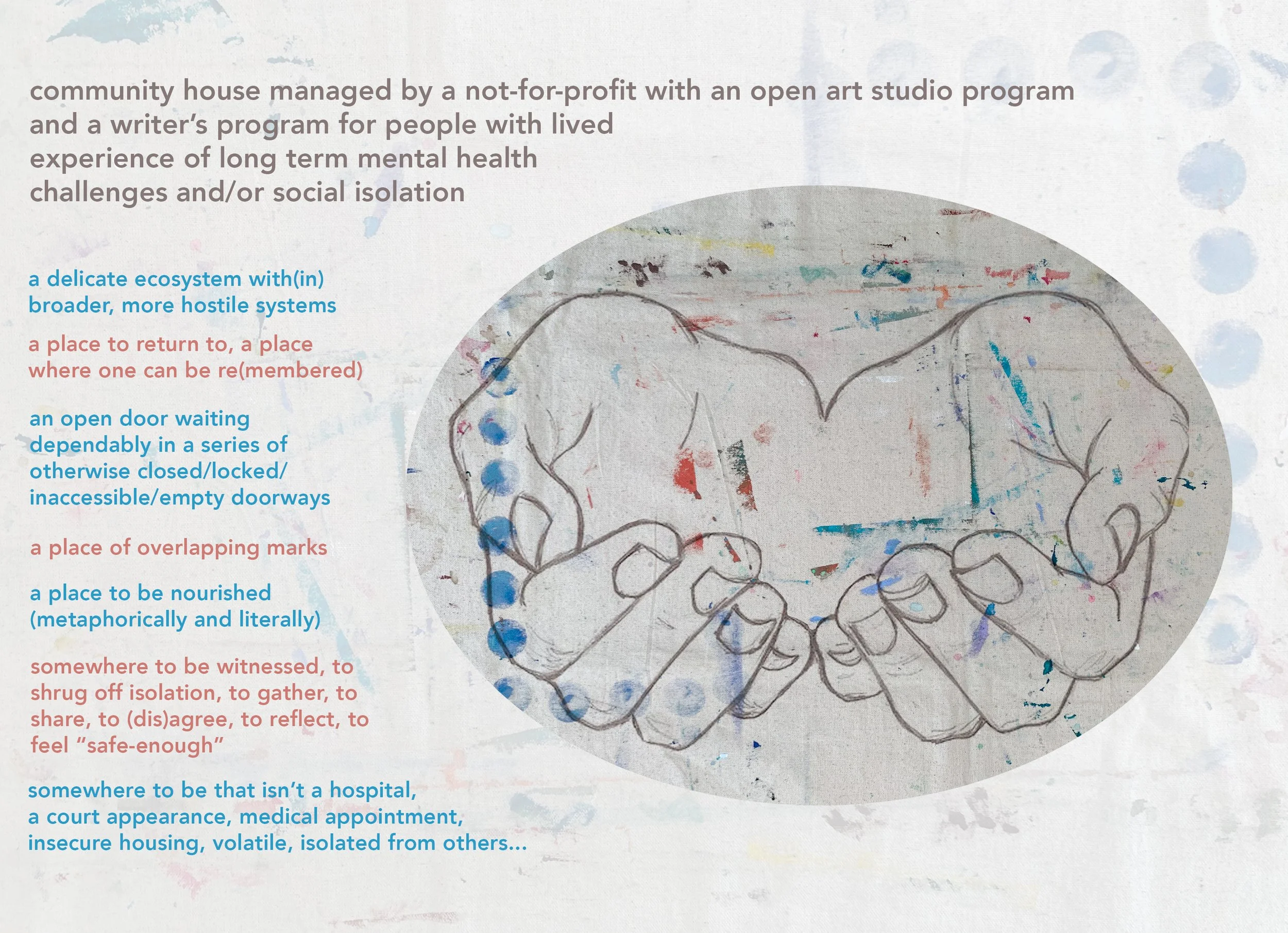
Figure 3.4: Emma Byrnes, Community Context, 2026. Digital collage and text.
SHAPE
I’m in the early stages of forming my art inquiry project when SHAPE is announced as the upcoming annual exhibitions’ theme.
I want to further my experience not only collaborating alongside my regular NOVA group but also companion participants in the three other NOVA groups that cater particularly to people with acquired brain injuries and intellectual disabilities.
With experience in printmaking, I understand how shape effortlessly lends itself to printing and the medium’s “...accessibility to those who might otherwise not succeed in art using traditional media; and the range of …techniques available that can be suited to different needs.” (Morton, 2019)
I think of the structure of cloth in relation to HCH.
The warp being the dependability of the program.
The weft expressing the dynamics of relationships formed and the ever-unfolding creativity with(in) the art-making/writing/materials.
In my home-studio, I stick foam shapes onto wooden blocks and print on fabric remnants.
A medley of printed fragments covers the table - a collective of uniquely-shaped individuals together, side-by-side - reminiscent of the HCH relational experiencing!
I sew these pieces together and, having been “...guided by the phenomena of the group” (Moon, 206, p. 10), the idea to co-create an improvisational quilted banner is born!
The project will feature collaborative printmaking on fabric using stamped shapes, inspired by the “coming-togetherness”, the marks on “the collective cloth” and the program forming the “shape” of the participants’ week.
I call it THE SHAPE OF US. (Figures 4.1, 4.2, 4.3, 4.4, 4.5, 4.6).
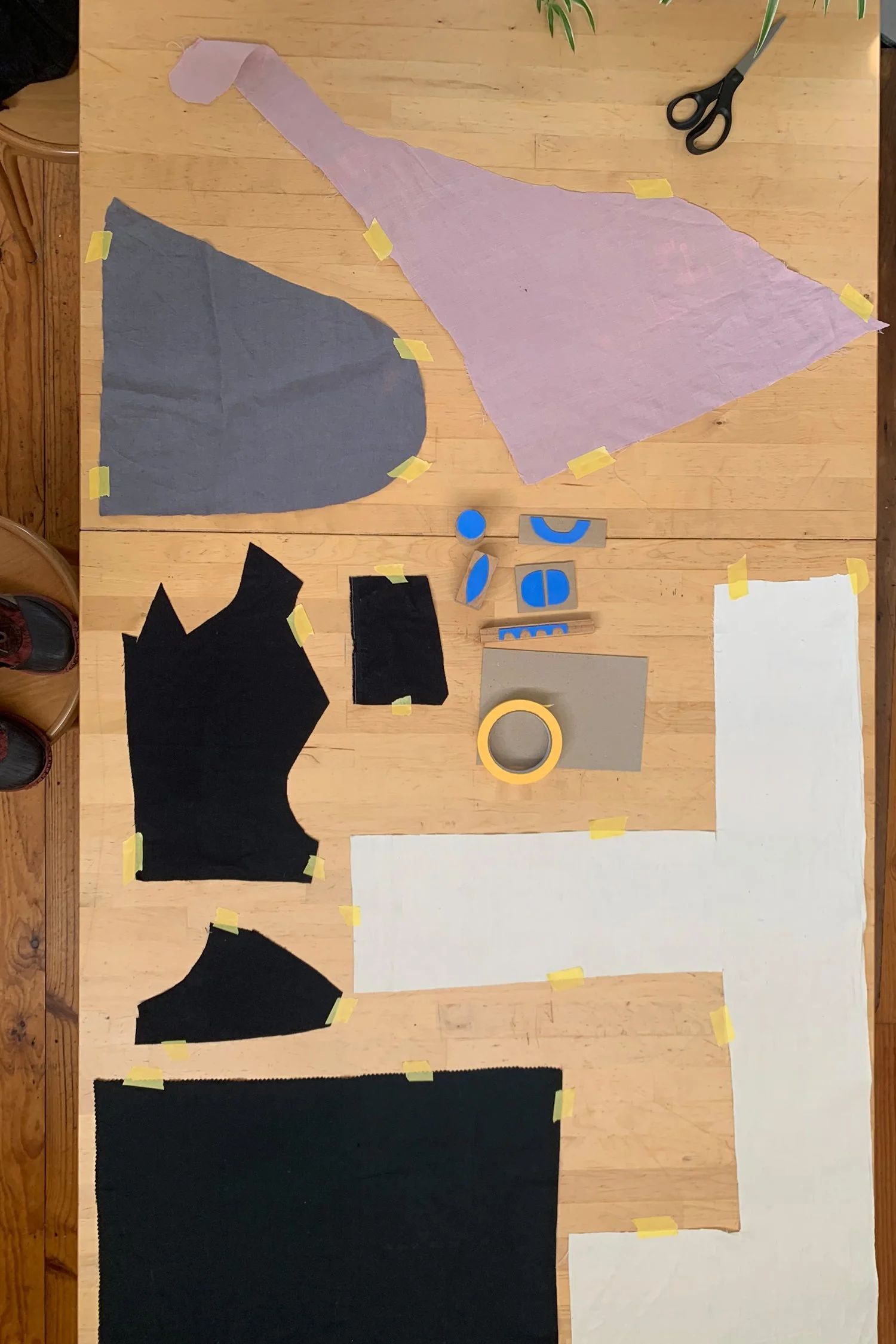
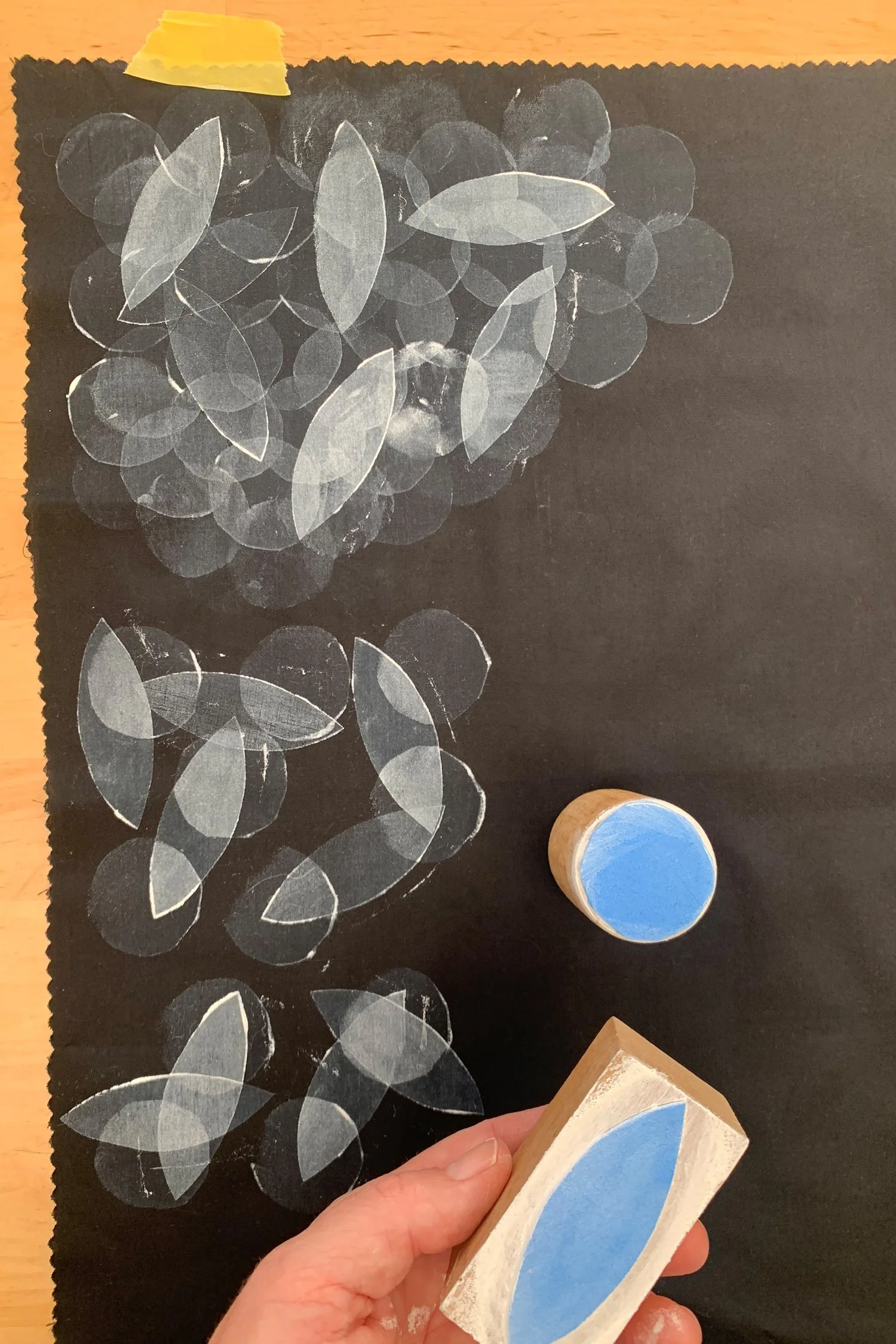
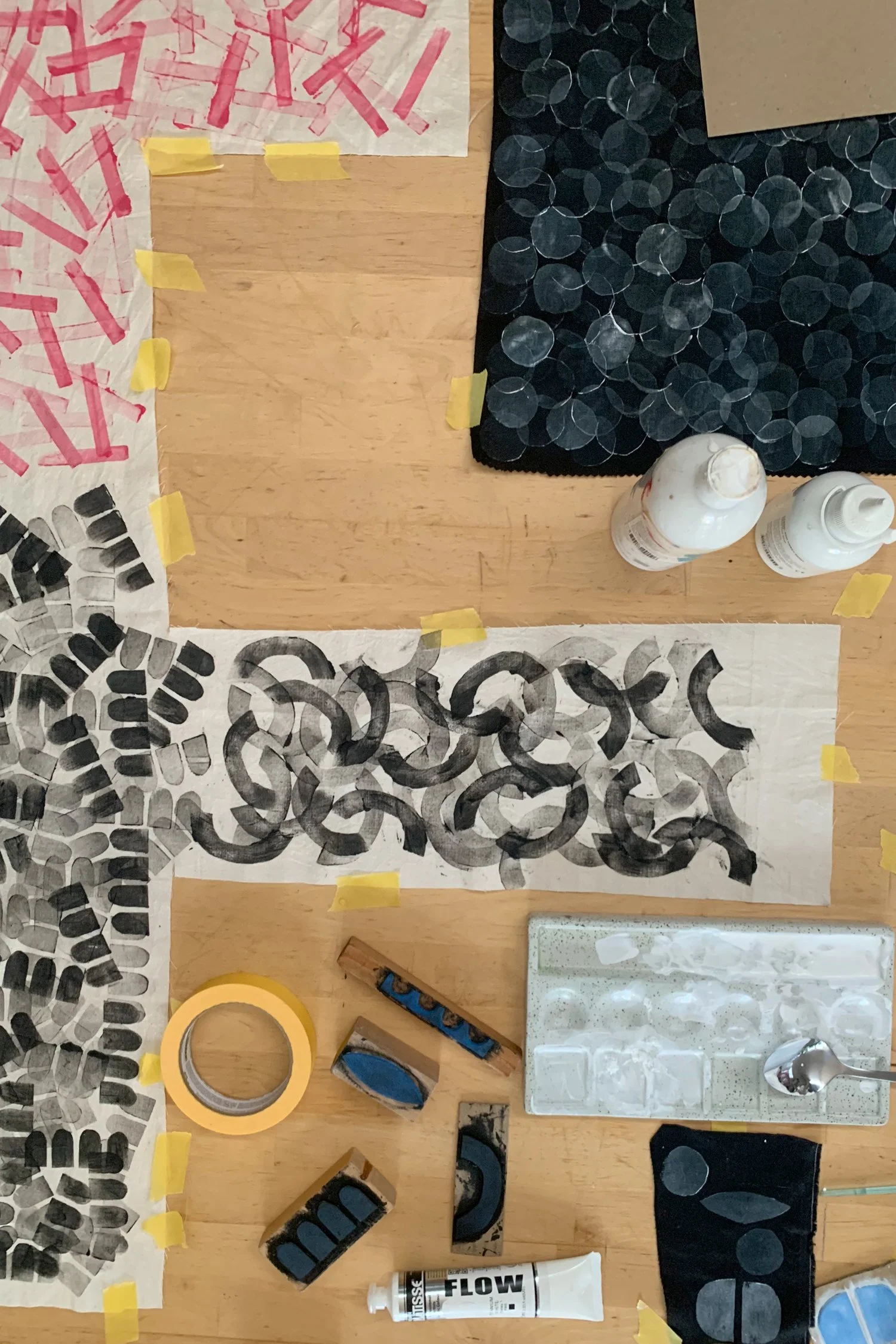
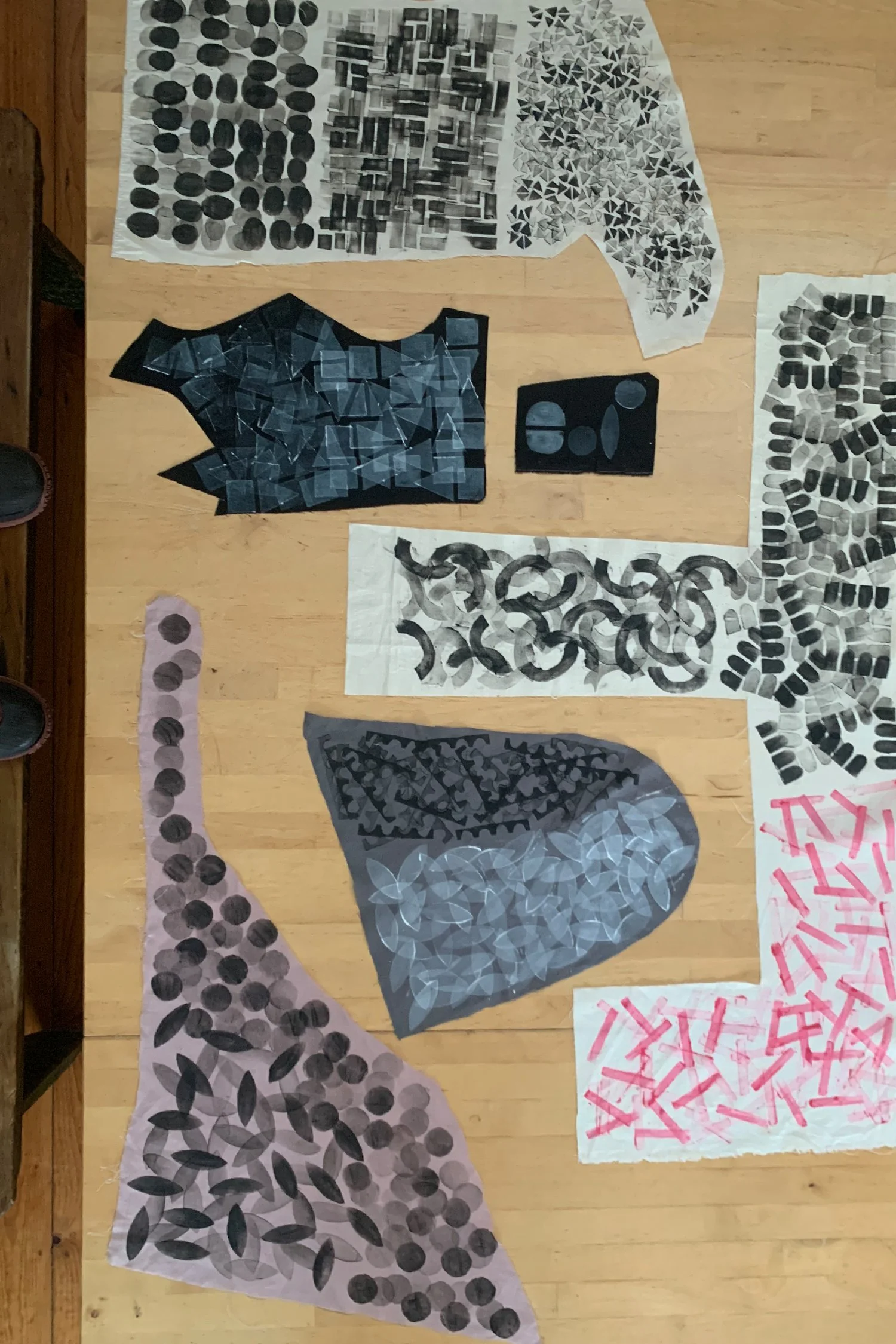
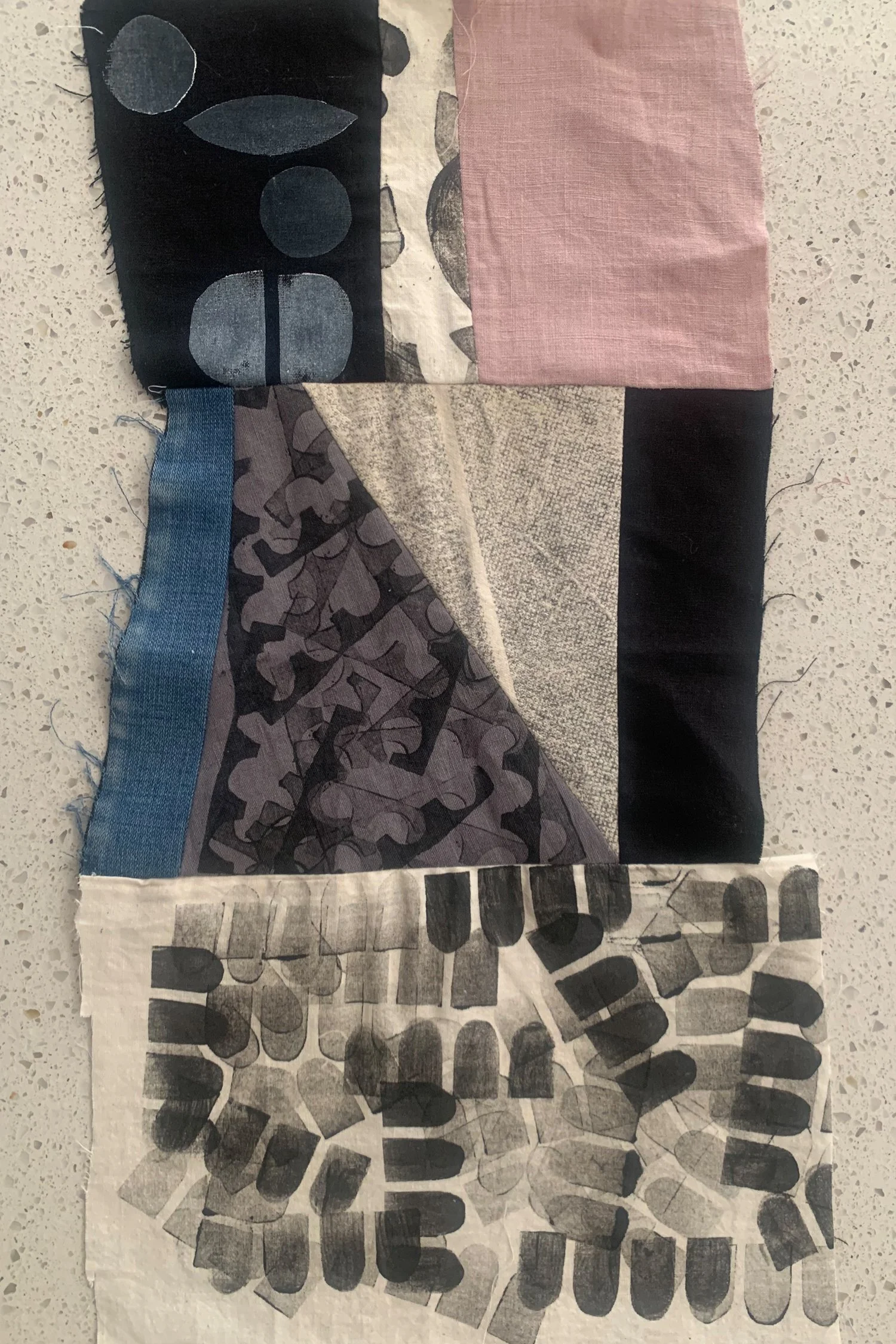
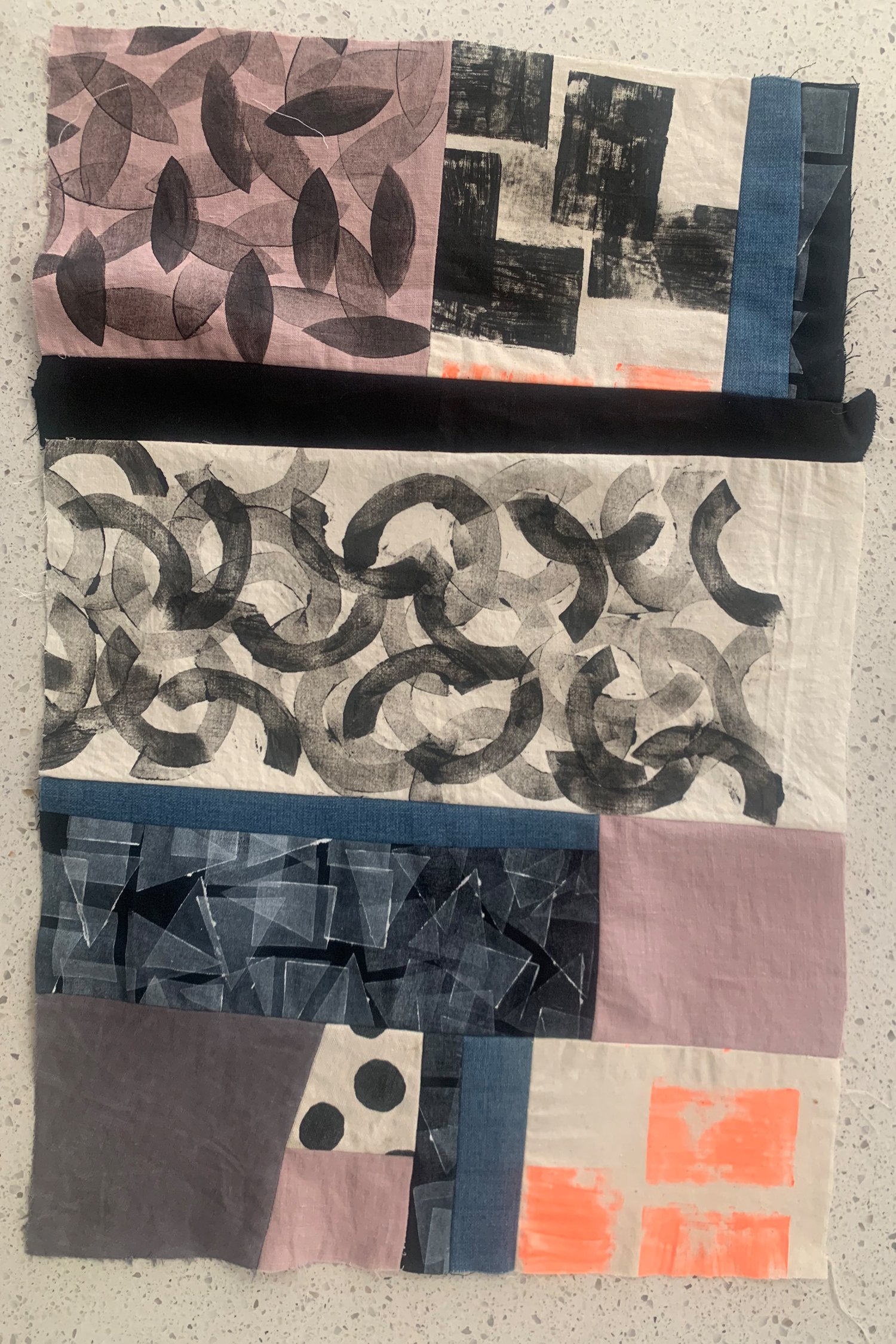
Considering my value of resourcefulness, I rummage through my own supplies and HCH materials, finding a copper rod for hanging the banner and random coloured fabrics + ink pots that include bright orange (not at all a colour I normally gravitate towards) and an accompanying random palette of indigo, musky pink, sky blue, black and white.
Anticipating the richness and variety of the mark-making, I decide to constrain the palette to these found colours to maintain visual cohesion for the finished project.
I’m gifted one of the canvas tablecloths to use as the banner’s backing, which will also serve as a low-stakes spot for participants to test their stamping techniques and to overlap their marks with past/current artists.
I discuss the project's ethical considerations with my supervisor.
My main concern is communicating clearly to participants' that their printed piece will be cut to fit into the collaborative quilt.
So I’ll provide totes and pouches for anyone wanting to create something for themselves and to print on using different colours outside the set palette.
I’ll label and track each printed piece, ensuring all participating artists are accounted for, so that nobody’s excluded because of poor planning,
To ensure some flexibility with options, I’ll provide beading/stitching options for anyone uncomfortable with printing and/or ink.
I plan to acknowledge the artists involved in the project, but will invite the use of pseudonyms or full anonymity for those who’d prefer.
Several artists end up choosing a pseudonym and, as a visiting practitioner, I discover it’s a novel way to connect with people I’d never previously companioned, facilitating meaningful and playful connections.
I consider ways to invite participation from the artists, wondering how I position myself as the person offering the experience.
My MIECAT supervisor poses the question:
“Working with vulnerable people and established groups requires a certain kind of permission or acknowledgement that you’re unknown to them. How will you step into their space and offer your invitation?”
So I create flyers, visiting each group to introduce both myself and the project, emphasising that their regular art therapist/facilitator will also be participating, to reiterate a continuity of care that feels supportive.
Several days after leaving the flyers in the studio, I get an excited buzz when I spot one covered in splotchy marks.
The materials are already taking hold!
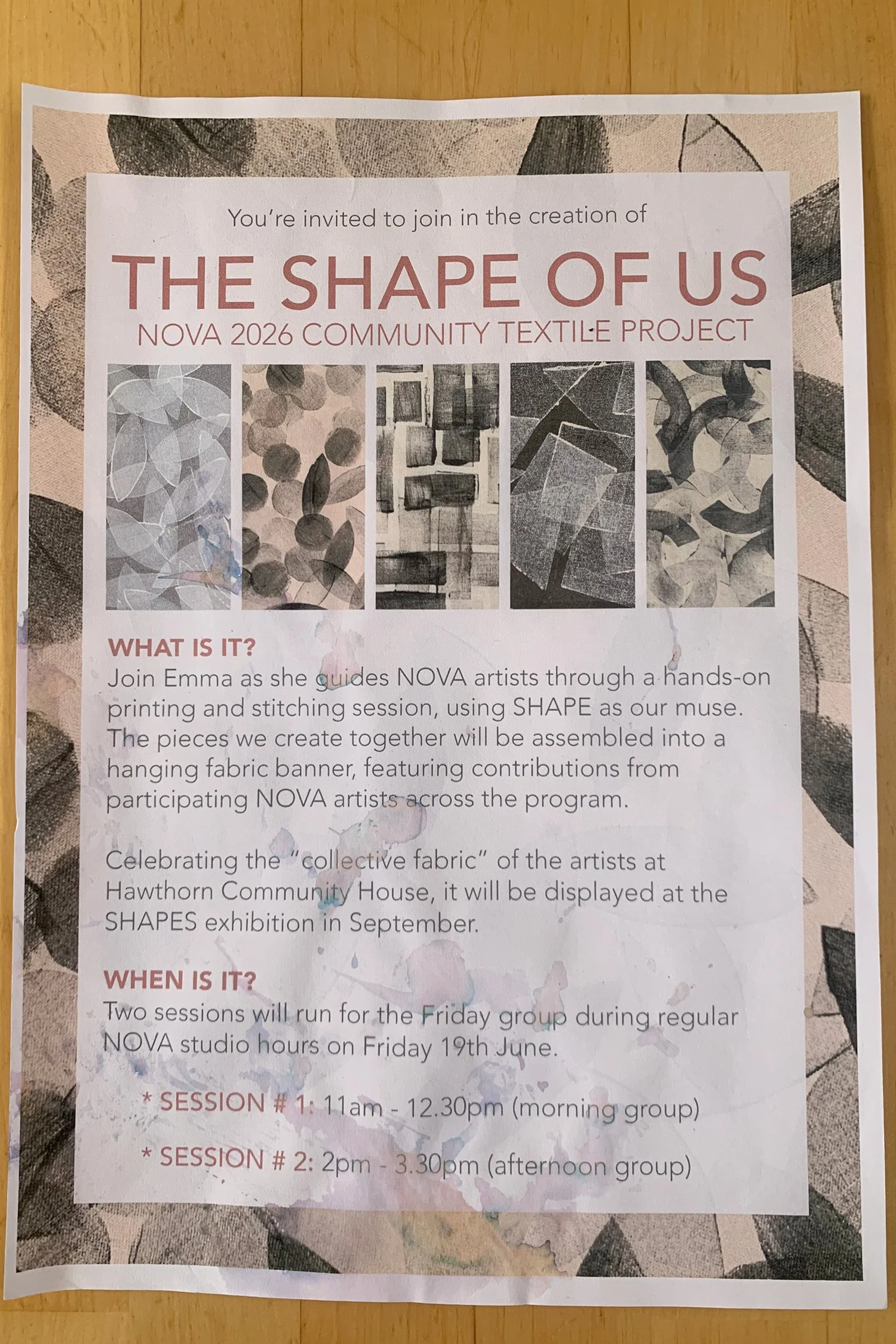
Figure 5.1: Emma Byrnes, Marks taking hold, 2026, Still photo of flyer.
23 artists participate in the workshops.
I demonstrate the printing techniques, emphasising that perfection is in the imperfection and ‘... that any mark…is acceptable.” (Moon, 2016, p.7)
Each participant takes things in their own direction and my supervisor tells me she’d never seen so much in-there-together-ness between the participants in her group.
A couple of the participants choose to string paper-clay beads I’d prepared earlier which end up hanging from each end of the copper rod when I hang the quilt.
A playful punctuation mark to the piece!
I feel a particularly deep resonance towards the leftover stamps, posting a reflection on my supervision group channel to which I receive some poignant ISRs.